🇰🇪 Kenya · Kikuyu · 6 min read
The Hare and the Lion
Cunning over force
Cultural Background
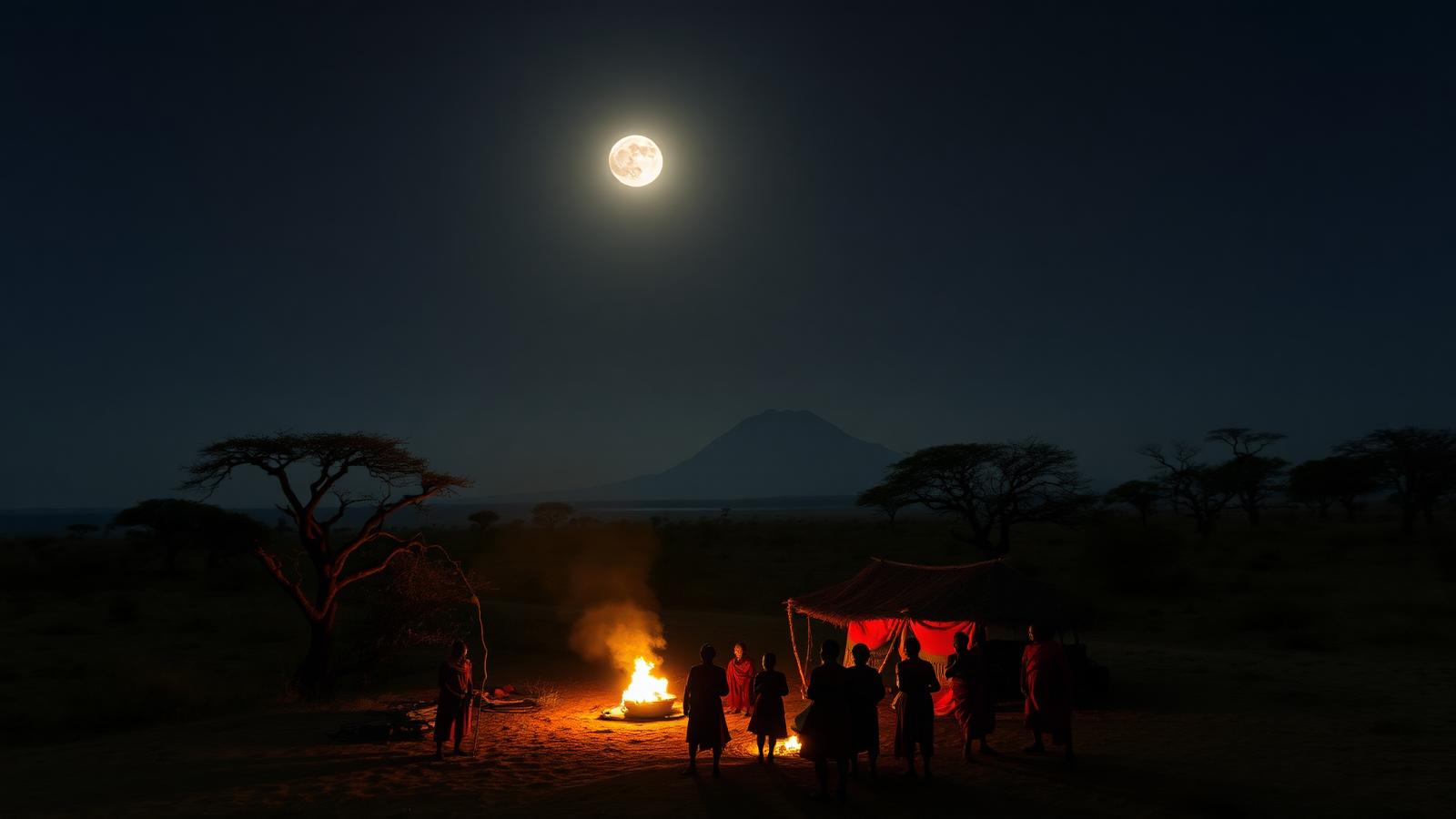
Among the Agikuyu of central Kenya, the hare, or Wamwitu, is a familiar trickster in stories told by grandmothers beside the evening fire, much like Anansi in West Africa or Unogwaja among the Zulu. These tales were never simply entertainment; they were how children learned that cleverness, restraint, and timing could overcome brute strength, an important lesson in a farming and herding society where the strongest hand did not always make the fairest chief. The well in this story is more than a plot device — wells and watering holes were shared community resources in Kikuyu villages, and disputes over who drank first or who dug the well were often settled not by force but by the wisdom of elders, echoing the hare's approach to the lion. The forest gathering of animals, too, reflects the Kikuyu tradition of the kiama, a council of elders who met to resolve conflicts through discussion rather than domination. A story where the weakest creature out-thinks the strongest was a gentle but pointed reminder to any Kikuyu child listening: physical power without wisdom is brittle, and true respect in the community is earned through cunning applied for the good of all, not merely for oneself.
The Moonlight Story
In the days when the forests near Mount Kenya were thick with cedar and wild olive, there ruled a lion named Simba Mkuu who believed his strength gave him the right to feast on whichever animal he pleased, whenever hunger struck him. He grew so bold that he called a meeting of every creature at the edge of the great clearing and declared that from that day forward, one animal each morning must present itself to him as breakfast, or he would hunt down ten in a single day out of spite.
The antelope wept. The buffalo lowered his great horned head in despair. The zebra paced in tight, frightened circles. None of them, for all their strength or speed, could imagine a way to refuse a lion who had already proven he could kill whomever he chose. And so, one by one, the animals began to draw lots each morning, sending their kin to the lion's den with heavy hearts.
One morning it was the hare's turn, small Wamwitu with his long ears and quick eyes, and the other animals murmured with pity, certain this would be the quickest breakfast the lion had ever had. But Wamwitu did not weep or drag his feet. Instead, he sat beneath a fig tree for a long while, thinking, until the sun had climbed well past where he was expected, and then he set off toward the lion's den at an unhurried pace, humming softly to himself.
When he arrived, hours late, Simba Mkuu was pacing furiously, his stomach growling, his mane bristling with rage. 'You dare arrive so late, small one? I should tear you apart on the spot for your insolence!'
'Forgive me, great Simba,' said the hare, bowing low but not trembling. 'I was delayed because another lion stopped me on the path and demanded to eat me himself. He said he was greater than you, and stronger, and that this forest belonged to him now, not to you.'
Simba Mkuu's fury turned instantly to outrage. 'Another lion? In my forest? Take me to him at once, and I will show him who truly rules here.'
The hare led the great lion deep into the trees until they reached an old stone well, deep and lined with smooth rock, that the elephants had dug many seasons before during a drought. 'He lives down there, great Simba,' said the hare, pointing into the dark water below. 'He is hiding from you, I think, now that he knows you are coming.'
Simba Mkuu leaned his massive head over the edge of the well and peered down into the still, dark water. There, staring back up at him with the very same fierce eyes, the very same golden mane, was another lion — proud, unmoving, clearly unafraid.
'You dare stare back at me?' roared Simba Mkuu, and his reflection roared back in perfect silence, mouth open, teeth bared. Enraged beyond thinking, the lion gathered himself and leapt into the well to destroy his rival once and for all, and the water closed over him, and the walls of the well were too smooth and steep for him to climb back out again.
Wamwitu sat back on his haunches at the well's edge and waited until he was certain the splashing had stopped, and then he made his way back through the forest, humming the same soft tune, to tell the other animals that they need never again draw lots at the edge of the clearing.
The animals could hardly believe it at first — the antelope insisted on seeing the well for himself, the buffalo grumbled that no story could be that simple, but when they gathered at the water's edge and looked down and saw no lion climbing free, they understood that the reign of fear was truly over.
That evening, the animals held a great feast beneath the fig trees, and for the first time in a long while, no one wept as darkness fell. The elephant, oldest and wisest among them, turned to the hare and said, 'We have tusks and horns and speed and size, yet it was your small mind that freed us all. Tell us, Wamwitu, how did you think of it?'
'I did not think of tusks or claws,' said the hare, 'because I have none. I thought only of what I did have — patience, and a story, and the shape of a well. Strength answers strength with more strength, and the forest would have grown quiet with grief either way. But cunning does not need to match a lion's size. It only needs to understand a lion's pride.'
And so it is still told among the Agikuyu, whenever a child feels too small or too weak to stand against a larger trouble, that it is not always the biggest paw that saves the village, but sometimes the smallest, quickest mind, patient enough to wait for the right moment and wise enough to let pride do half the work itself.
Moral Lessons
What the Story Teaches
- For children
- You do not need to be the biggest or strongest to solve a big problem. A clever, patient mind can do what muscles cannot.
- For adults
- Confronting a bully with more force often only invites more violence. Sometimes the wisest response is patience and a well-placed idea.
- For leadership
- A leader who rules by fear and appetite alone eventually meets a reflection of his own worst instincts. Pride, unchecked, is its own undoing.
- For business
- Competing head-on against a dominant rival's strength rarely works. Find the terrain where your quickness and insight outmatch their scale.
- For family
- When a family faces a problem too large for any one member to solve by force, it is often patience and creative thinking, not raw effort, that carries the day.
- For community
- A community threatened by one powerful figure is rarely saved by matching that power. It is saved by the quiet cleverness willing to act on everyone's behalf.
Discussion Questions
For the Family or Classroom
- Why did none of the larger animals think to use trickery instead of fear against the lion?
- What did the hare understand about the lion's pride that allowed his plan to work?
- Why do you think the hare arrived late on purpose rather than avoiding the lion entirely?
- How does the well symbolize the lion's own downfall rather than an outside enemy?
- What does the proverb 'Haba na haba hujaza kibaba' mean in relation to the hare's plan?
- Can you think of a modern situation where cleverness solved a problem that force could not?
Related Proverbs
"Haba na haba hujaza kibaba."
"Fikiri kabla ya kutenda."
"Kiburi hutangulia anguko."
Characters
Wamwitu (Hare)
The clever trickster
Patient, quick-witted, calm under pressure
Symbolism: Wisdom and cunning triumphing over brute force
Simba Mkuu (Lion)
The tyrant of the forest
Proud, hungry for power, quick to anger
Symbolism: Strength unchecked by wisdom, undone by its own pride
The Elephant
Elder of the animals
Wise, respectful, curious
Symbolism: The community's recognition that wisdom outlasts size
Vocabulary
Wamwitu
wahm-WEE-too · Kikuyu
Hare, a common trickster figure in Kikuyu tales
Simba
SEEM-bah · Swahili, widely used across Kenya
Lion
Kiama
kee-AH-mah · Kikuyu
A council of elders who resolve disputes
Watch
Animated story film coming soon.
Listen
Narrated audio coming soon.
Music
McEncomium song adaptation coming soon.
Teacher Resources
For Classrooms and Homes
Download the full parable as a printable PDF — story, cultural background, moral lessons, discussion questions, proverbs, characters, and vocabulary, all in one handout for the classroom or family read-aloud.
Join the conversation
Village Square
Share your thoughts on this parable, ask questions, and connect with others exploring African stories and wisdom.
Village Voices
What villagers say about "The Hare and the Lion"
Loading comments…