🇨🇲 Cameroon · Fulani · 6 min read
The Fulani Shepherd and the Stranger
Hospitality and judgement
Cultural Background
Among the pastoral Fulani (Fulɓe) of northern Cameroon, hospitality is bound tightly to a code of conduct called pulaaku — a way of being that includes patience, dignity, restraint, and above all, generosity toward guests, even strangers. Cattle and milk hold deep symbolic and economic value in Fulani life, so to share one's last bowl of milk with a stranger is not a small courtesy but a genuine sacrifice, one that reveals the deepest values of a herder's upbringing. Tales of disguised elders or spirits testing hospitality are common across the Sahel, reminding each generation that pulaaku is proven not in comfortable times, but in the moment a stranger arrives at your tent with nothing to offer in return.
The Moonlight Story
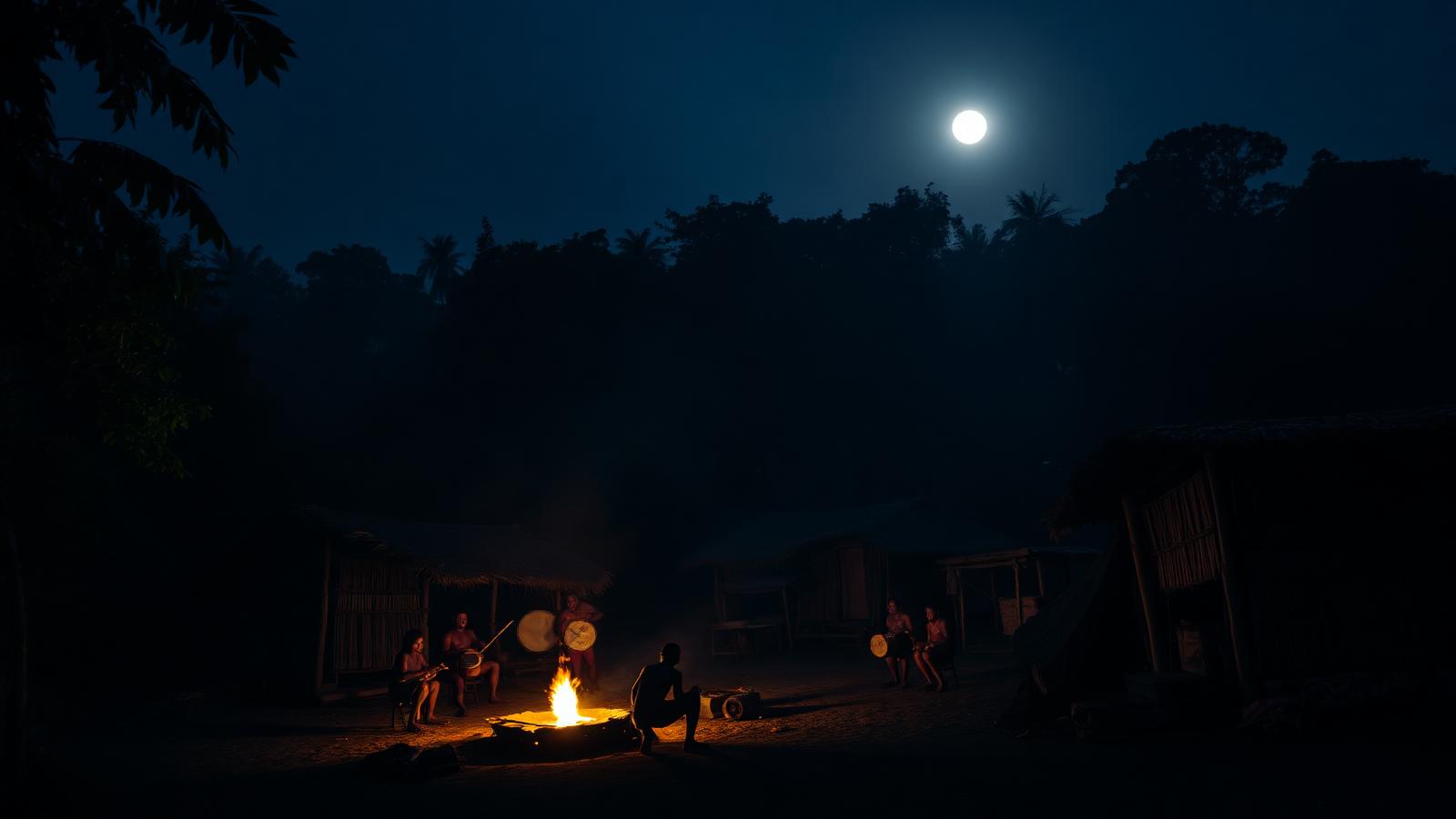
In the dry season, when the grass thinned to gold stubble across the northern plains, a young Fulani shepherd named Amadou drove his family's small remaining herd toward the last green pasture near the hills. It had been a hard season — sickness had taken half the herd the year before, and what remained of Amadou's family's wealth walked slowly on four legs beside him, watched over with more care than gold.
As evening fell and Amadou made camp beneath a lone acacia, he noticed a figure approaching from the direction of the setting sun — an old man, dust-covered, walking with the uneven gait of someone who has travelled very far on very little food. The old man's clothes were plain and torn at the hem, and he carried nothing but a walking staff worn smooth by years of use.
'Peace be upon you, young one,' the old man said, his voice thin with exhaustion. 'I have walked three days without proper food. Might you have anything to spare for a tired traveller?'
Amadou looked at his own small store of provisions — a single calabash of milk drawn that morning from his one healthy cow, meant to last him and sustain the calf he was nursing back to health, and a handful of dried millet meant for his own evening meal. It was, in truth, very little, and giving any of it away would mean going hungry himself that night.
But Amadou had been raised by a grandmother who often said that pulaaku was not tested in the season of plenty but in the season of lack, and that a Fulani who guarded his food from a hungry stranger while his herd grazed fat beside him had already lost something no cattle could replace.
'Sit, elder,' Amadou said, gesturing to a spot near his small fire. 'I have milk, and I have millet, and though it is not much, it is yours as much as mine tonight.'
He poured half the calabash of milk into a smaller bowl and handed it to the old man along with a generous portion of the millet, keeping only a modest share for himself. The old man drank slowly, gratefully, and when he had finished, he studied Amadou for a long moment with eyes that seemed, in the firelight, far too sharp and alert for a man who claimed such exhaustion.
'Tell me, young shepherd,' the old man said, 'why did you not ask my name, or where I come from, or whether I could repay you, before sharing what little you have?'
Amadou shrugged. 'My grandmother taught me that hospitality asked with conditions is not hospitality at all. A guest who must prove himself worthy before being fed is not truly a guest — he is a debtor being tested. I do not know who you are, elder, but you were hungry, and I had food, and that was enough of a reason.'
The old man was silent for a long while, watching the fire. Then he rose, steadier now than when he had arrived, and let his true bearing show — the straight back, the clear eyes, the unmistakable authority of someone accustomed to being obeyed.
'I am Ardo Souleymane,' he said, naming himself as one of the senior elders of the region, a man whose judgement was sought in disputes across many villages. 'Each year, at a season of my choosing, I travel disguised as a beggar through the territories under my care, to learn which of our young people still carry pulaaku in their hearts and which have let it wither along with the dry grass. Many turn me away, claiming they have nothing, though I have watched them eat well an hour before. Some give grudgingly, counting what they have given as though it were a loan. You are the first in three seasons to give without asking who I was.'
Amadou, astonished, could only bow his head. 'I did only what my grandmother raised me to do, Ardo.'
'That,' said Ardo Souleymane, 'is exactly why it matters. The measure of a person is not what they do when they know they are being watched by an elder in disguise — it is what they do when they believe no one of consequence is watching at all.'
Before he left the next morning, the elder blessed Amadou's remaining herd and promised that word of his family's generosity would reach the council of elders, who would remember it when matters of grazing rights and water access came before them in the dry seasons ahead. But Amadou, in truth, cared little for that reward. He had already received what mattered most to him — the quiet certainty that his grandmother's teaching had not died with her, and that he had carried it, without knowing he was being tested, all the way to a stranger's door.
Moral Lessons
What the Story Teaches
- For children
- Being kind to someone is worth doing even when you do not know who they are or whether they can repay you.
- For adults
- Your true character shows most clearly in the moments no one important seems to be watching.
- For leadership
- Judge people's character by how they treat those who cannot help their career, not by how they treat you.
- For business
- How your team treats people with no power over them — junior staff, vendors, strangers — reveals more than how they treat clients they are trying to impress.
- For family
- Teach children generosity through your own example long before they understand why it matters.
- For community
- A community that honours hidden generosity, not just public charity, builds a culture of quiet, consistent kindness.
Discussion Questions
For the Family or Classroom
- Why did Amadou choose to share his food even though he had very little himself?
- What did Amadou's grandmother mean by saying hospitality with conditions is not hospitality at all?
- Why do you think Ardo Souleymane tests people by disguising himself rather than announcing who he is?
- What does it mean that Amadou gave without knowing he was being watched?
- Have you ever given help to someone without expecting anything back? How did it feel?
- What does the proverb about being both sickness and cure suggest about personal responsibility?
Related Proverbs
"Neɗɗo ko ñawu, neɗɗo ko safaara."
"The guest at your fire tonight may carry your name to tomorrow's council."
"Pulaaku is not worn like a cloth; it is proven like a scar."
Characters
Amadou
Young Fulani shepherd
Generous, humble, raised with strong values
Symbolism: Unselfconscious integrity
Ardo Souleymane
Disguised elder
Wise, discerning, testing without cruelty
Symbolism: The community's watchful conscience
Vocabulary
Pulaaku
poo-LAH-koo · Fulani / Fulfulde
The Fulani code of conduct, including dignity, restraint, and hospitality
Ardo
AR-doh · Fulani / Fulfulde
A traditional Fulani title for a senior herding-community elder or leader
Calabash
KAL-uh-bash · Common across West and Central African cultures
A hollowed gourd used as a container for liquids such as milk
Watch
Animated story film coming soon.
Listen
Narrated audio coming soon.
Music
McEncomium song adaptation coming soon.
Teacher Resources
For Classrooms and Homes
Download the full parable as a printable PDF — story, cultural background, moral lessons, discussion questions, proverbs, characters, and vocabulary, all in one handout for the classroom or family read-aloud.
Join the conversation
Village Square
Share your thoughts on this parable, ask questions, and connect with others exploring African stories and wisdom.
Village Voices
What villagers say about "The Fulani Shepherd and the Stranger"
Loading comments…